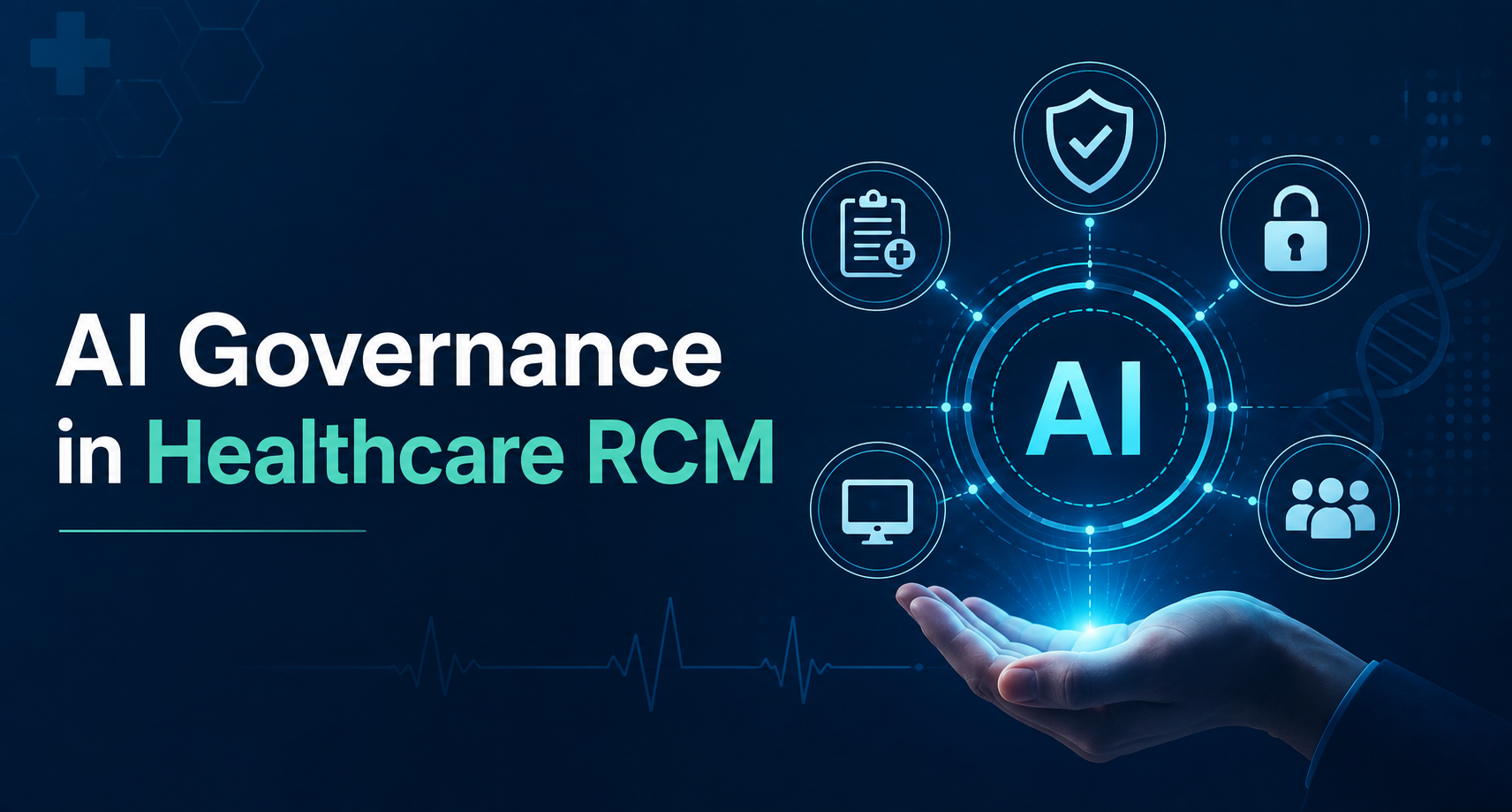
AI Governance in Healthcare RCM and need of interoperability between different operating systems: Why It Matters More Than Ever
Artificial Intelligence is rapidly becoming part of everyday healthcare revenue cycle operations. From medical coding and claims processing to denial management and payment forecasting, AI is helping organizations improve efficiency, reduce manual effort, and make faster decisions.
As adoption grows, however, the conversation is evolving.
Healthcare leaders are asking how AI can be implemented responsibly, securely, and transparently.
This is where AI governance becomes essential.
Strong AI governance ensures that technology supports better decision-making while maintaining patient privacy, regulatory compliance, data security, and operational accountability. It provides the framework needed to ensure AI systems remain accurate, explainable, and aligned with the standards expected in healthcare.
What Should Healthcare Organizations Look for?
As AI becomes more deeply embedded in RCM workflows, healthcare organizations should evaluate solutions against a few key principles:
Transparency
AI recommendations should be explainable. Teams should understand why a claim was flagged, a code was suggested, or a denial risk was identified.
Human Oversight
AI should support experts, not replace them. Human review remains essential for complex decisions, regulatory compliance, and quality assurance.
Privacy and Security
Patient information must remain protected through robust data governance, strong security controls, and compliance with healthcare regulations.
Continuous Validation
Healthcare regulations and payer requirements change frequently. AI models should be regularly monitored and updated to maintain accuracy and reliability.
Fairness and Accountability
Organizations should regularly assess AI systems to identify bias and ensure consistent outcomes across different patient populations and healthcare settings.
Looking Ahead
AI has the potential to transform Healthcare RCM, but its long-term success will depend on more than automation. Responsible governance will play an equally important role in building trust, improving adoption, and ensuring that AI delivers meaningful value without compromising compliance or patient confidence.
As healthcare continues its digital transformation, organizations that prioritize responsible AI alongside innovation will be better positioned for sustainable growth with solutions that can bring different operating systems together.